
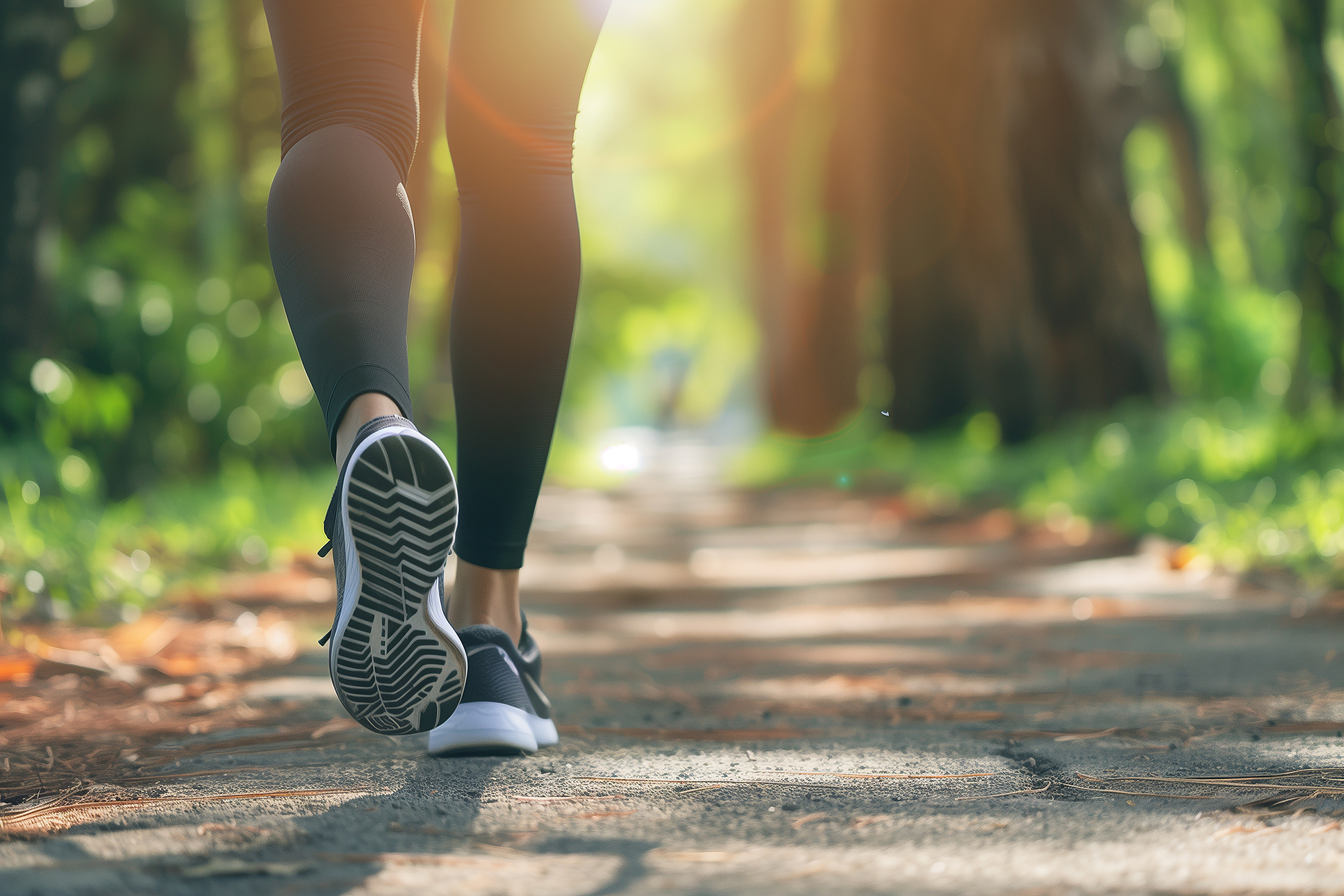
Walking after eating offers several surprising health benefits. This low-impact exercise done after a meal for even just two minutes packs a powerful health punch from lowering your blood sugar to improving your digestion. Go ahead and let the dishes stack up after dinner and take a stroll around the block. Here are five health benefits of walking after eating …

1. Balance And Regulate Blood Sugar
After eating, your body converts foods to glucose which is used for energy. When you lounge on the sofa after dinner watching your favorite show, the glucose is stored in the liver and muscles as glycogen which results in a post-meal blood sugar spike. Opting for a walk or other activity alerts your body to use the glucose so less of it remains in your blood. If you’re wondering why this is important, your blood sugar affects energy levels and how you feel each day. Maintaining well-balanced blood sugar helps prevent long-term health problems such as type 2 diabetes, heart disease, kidney disease and vision loss.

Grab your walking shoes and leash up the dog for a walk relatively soon after you finish eating. Research shows blood sugar spikes 60 to 90 minutes post meal. The good news is that as little as two to five minutes of walking makes an impact. Of course a longer walk will deliver more benefits but a quick stroll after dinner engages muscles and lowers blood sugar.
2. Better Digestion Of Your Meal
No one enjoys that overly full feeling that accompanies a meal. In addition to eating slowly and watching portion sizes, a post-meal walk alleviates this bloated feeling. A 10 to 15 minute walk stimulates the stomach and intestines helping food move through the digestive system and reducing gas. One more reason to hit the streets after dinner!


3. Lower Blood Pressure And Improve Circulation
Hypertension is one of the leading causes of heart disease and stroke, and walking after meals lowers blood pressure. In fact, taking three 10 minute walks—that’s a short walk after each meal—can reduce systolic and diastolic blood pressure for those with prehypertension and hypertension. Your short walk helps improve blood circulation as more blood is pumped to your muscles and brain leaving you feeling more invigorated.

4. Burn Off Some Of Your Dinner Calories
If weight loss is your goal, a post-meal walk can play a role in your efforts. Since walking immediately after a meal boosts your metabolism, it can help you burn more calories from fat. If this is your goal, you should aim for a slightly longer walk and/or faster paced walk. For example, if you weigh 150 pounds, you can expect to burn about 100 calories per mile walking at a mild pace. Let’s say it takes you 20 minutes to walk a mile. That means a 30-minute walk could help you burn about 150 calories.
5. Boost Your Mood Plus Sleep Better
We’ve all heard of the runner’s high when the feel-good hormones of endorphins and dopamine spike. We have good news—walking after eating can boost your mood too. Exercise of any type at any time of day helps reduce the levels of stress hormones and increases positive hormones. Plus, boosting these hormones also helps you fall asleep faster and stay asleep longer. It’s a win-win all around!

Now you know the great benefits of walking after a meal. Don’t fret if you can only manage a couple of minutes at first—that’s better than nothing at all. There are many simple ways to incorporate this great habit into daily life. For example, park as far away as possible to the restaurant if you’re eating out; opt for the stairs over the elevator whenever possible; or a quick lunchtime walk between meetings. Most importantly make post-meal walks a habit and enjoy the plethora of health benefits.


